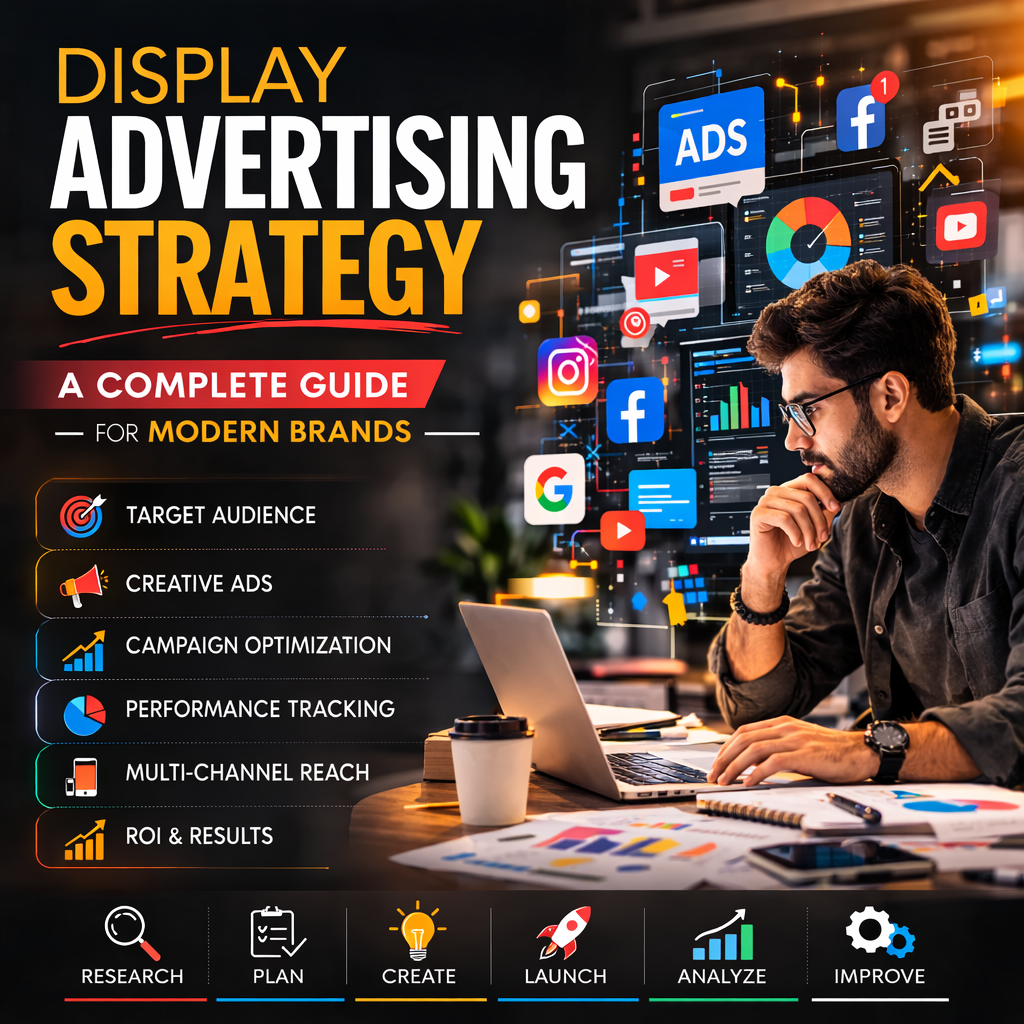
In today’s digital marketplace, businesses compete for attention across websites, apps, and social platforms. Therefore, brands need smarter marketing that blends creativity, data, and technology. A strong display advertising strategy helps you reach the right audience with engaging visuals that drive action and build long-term brand recognition while keeping your message consistent across every important customer touchpoint.
Display advertising uses banners, videos, and interactive ads across websites, social networks, and apps. These formats often include clickable elements that send users to landing pages or offers. As a result, you can grow brand awareness, improve engagement, and increase conversions through targeted campaigns.
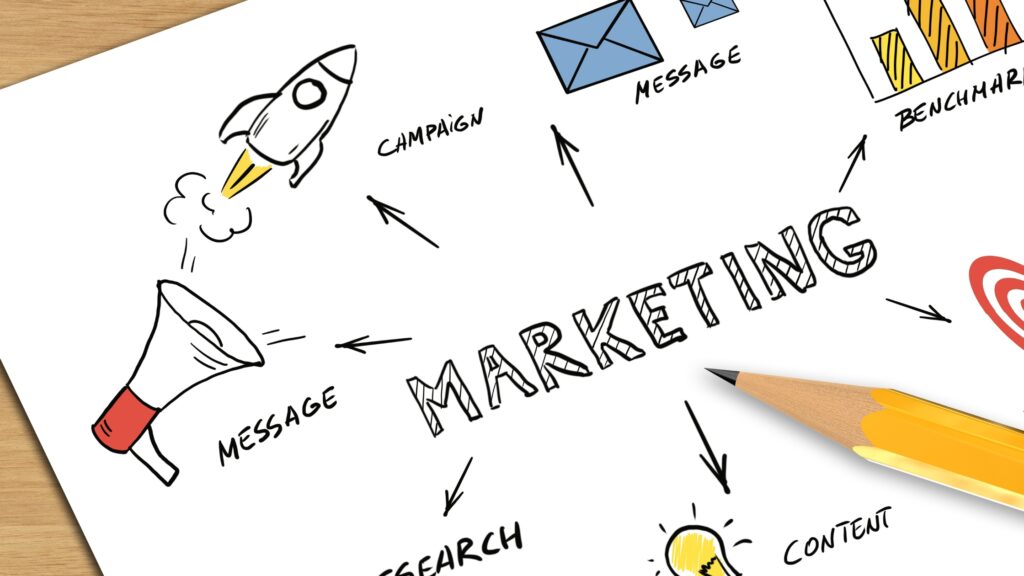
Understanding Display Advertising in the Digital Landscape
Display advertising plays a critical role in modern digital marketing because it lets brands communicate visually across many platforms. Unlike text-only ads, it combines imagery, motion, and messaging to grab attention fast. Display ads can appear as banners, videos, animated graphics, or interactive elements on websites and apps, and they target users by demographics, location, interests, or browsing behavior. Consequently, businesses deliver relevant messages at the right time. Furthermore, these campaigns support goals like brand awareness, remarketing, and lead generation, and when the creative aligns with targeting, engagement and conversions increase. Learn more about Social Media Advertising.
Why Businesses Need a Display Advertising Strategy
A clear display advertising strategy keeps campaigns measurable and efficient, boosts visibility, builds faster brand recall, and powers remarketing, helping you reach new audiences and re-engage past visitors.
- Expand visibility across websites, apps, and high-traffic digital placements.
- Reach new audiences who are not actively searching yet.
- Build stronger brand recall with visual, fast-to-process messaging.
- Re-engage past visitors through remarketing to increase conversions efficiently.
In short, a focused display plan strengthens awareness, improves engagement, and turns more clicks into customers by guiding audiences through every step.
Key Elements of a Successful Display Advertising Strategy
A strong display campaign combines several critical components that work together to produce results, ensuring consistent messaging, smarter targeting, and measurable improvements across every stage of the funnel.
1. Clear Campaign Goals
Every campaign should start with clear objectives like awareness, leads, launches, or traffic. Defined goals improve measurement accuracy and help teams select the best platforms, ad formats, and messaging for stronger results.
2. Audience Targeting and Segmentation
Audience targeting decides who sees your ads. Therefore, match demographics, interests, location, and behavior to ideal customers. Remarketing reaches past visitors, making budgets more efficient by focusing on higher-converting users.
3. High-Quality Visual Creative
Visual design determines whether users notice your ad. Therefore, use clear imagery, bold colors, and concise copy. Add a strong call-to-action like “Learn More.” Consistent branding strengthens recognition, so audiences quickly connect visuals with your identity.
4. Platform Selection
Different platforms deliver different results depending on the campaign objective, audience behavior, budget size, and how well your creative fits each placement.
Businesses often place display ads across:
- Websites within advertising networks.
- Mobile applications.
- Social media platforms.
- Video streaming services.
- Programmatic advertising networks.
These platforms allow advertisers to reach audiences across multiple devices and digital environments. Therefore, marketers can create consistent brand experiences across the internet.

Advanced Techniques for Better Display Campaign Results
Modern advertising strategies increasingly rely on data analysis and automation to improve campaign performance, reduce wasted spend, speed up testing, and scale winning ads across platforms.
- Programmatic Advertising: Automated real-time ad buying for better targeting and efficiency at scale.
- Retargeting Campaigns: Re-engage past visitors and boost conversions with timely reminders across channels.
- Data-Driven Optimization: Track key metrics and refine creatives, targeting, and placements for stronger ROI.
When you combine automation with continuous optimization, you reduce wasted spend, reach the right audience faster, and steadily improve results over time.
Measuring the Success of Display Advertising
A display campaign becomes truly effective when marketers monitor performance indicators and refine strategies accordingly.
Key performance metrics include:
- Impressions: Number of times an ad appears on screens.
- Click-through rate (CTR): Percentage of users who click the ad.
- Conversion rate: Number of users who complete a desired action.
- Cost per acquisition (CPA): Cost required to generate a conversion.
Tracking these metrics helps marketers identify what works and what requires improvement. Moreover, performance insights allow companies to optimize their campaigns for better long-term results.
Common Mistakes to Avoid in Display Advertising
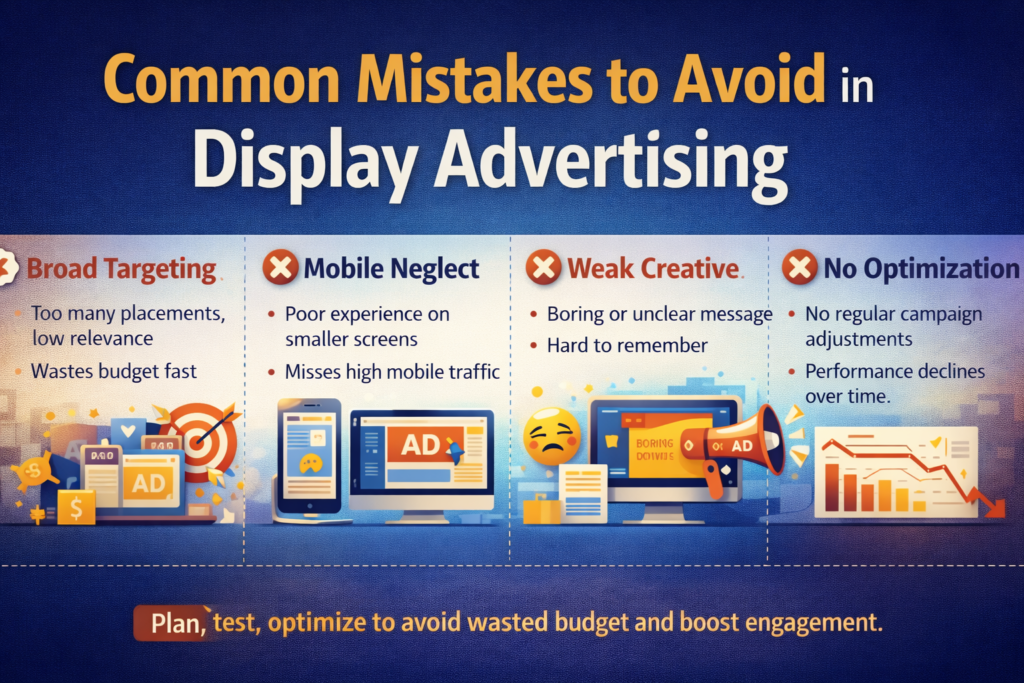
Display ads work best with focus. Broad targeting, weak creatives, and poor optimization waste budget and reduce engagement. Therefore, plan strategically, test continuously, and refine targeting and messaging for better results.
- Broad Targeting: Targeting audiences too broadly reduces relevance and wastes budget fast across multiple placements.
- Mobile Neglect: Ignoring mobile-first design lowers visibility and click-through rates on smaller screens, especially during high-traffic mobile browsing.
- Weak Creative: Using weak creatives makes the message unclear and forgettable for busy viewers.
- No Testing: Skipping A/B tests prevents learning what performs best for each audience, so performance improvements stay slow and unclear.
- No Optimization: Failing to optimize regularly causes performance to decline over time, and costs rise.
When you avoid these mistakes and stay data-driven, your display campaigns remain efficient, consistent, and conversion-focused across every channel.
The Future of Display Advertising
Display advertising continues to evolve as digital technology advances. Artificial intelligence, programmatic automation, and data analytics are transforming how brands reach audiences.
Furthermore, new formats such as interactive ads, immersive media, and connected TV advertising are expanding the possibilities for marketers.
As consumer behavior increasingly shifts toward mobile devices and digital platforms, display advertising will remain an essential tool for building brand awareness and driving engagement.
Conclusion
A well-planned display advertising strategy helps businesses reach targeted audiences, strengthen brand recognition, and increase conversions through strong visuals, precise targeting, and continuous optimization. However, success requires creative expertise and smart planning, so many brands use data-driven support. MobileRad helps businesses build tailored strategies, including display advertising, OTT, geofencing, and lead generation, using technology, creative design, and analytics to increase visibility, attract customers, and drive sustainable growth.

Ranjan Barman
Ranjan Barman is the founder of MobileRad, helping small businesses across the United States grow through programmatic, video, display, OTT/CTV, and retargeting advertising.