Small businesses face increasing competition in today’s fast-paced digital world. Therefore, they must adopt smarter strategies to reach the right audience and maximize every marketing dollar. Digital advertising for small business offers a powerful solution that combines data, automation, and creativity to drive measurable results, improve customer engagement, strengthen brand presence, and support long-term business growth in competitive markets.
Unlike traditional advertising, digital advertising allows businesses to target specific audiences, track performance in real time, and optimize campaigns continuously. As a result, even small businesses can compete with larger brands and achieve sustainable growth, stronger visibility, and improved customer acquisition.
What Is Digital Advertising for Small Business?
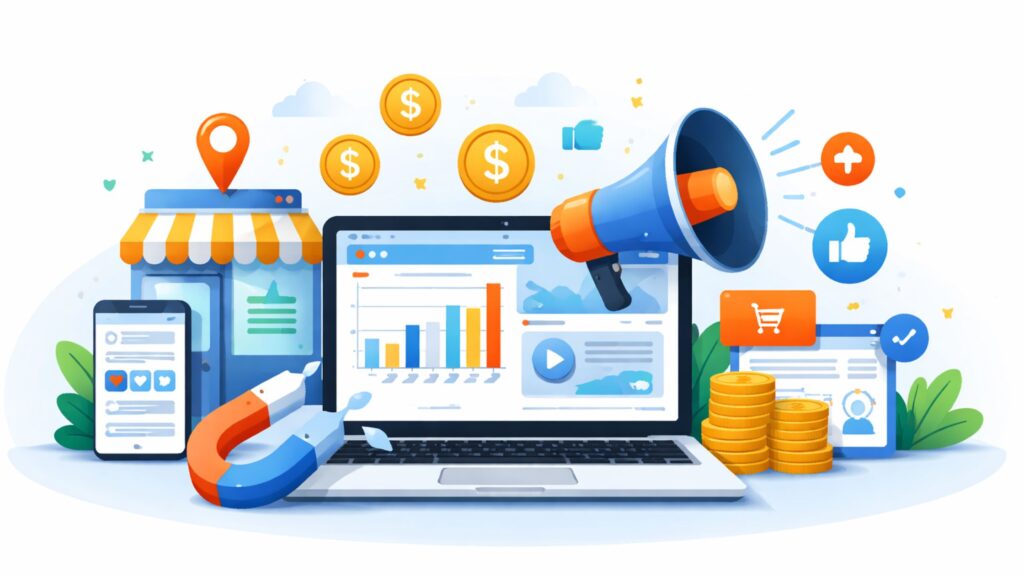
Digital advertising for small business refers to using online platforms such as search engines, social media, websites, and mobile apps to promote products or services. It includes formats like display ads, video ads, pay-per-click campaigns, and social media promotions.
Instead of guessing what works, businesses rely on data and analytics to make decisions. This approach ensures that every campaign reaches the right audience at the right time.
Moreover, modern advertising uses automation and real-time bidding to place ads efficiently. This means businesses can optimize budgets and improve performance without manual effort.
Why Digital Advertising Matters for Small Businesses
Digital advertising helps small businesses compete effectively, reach ideal customers, control budgets wisely, and build consistent brand visibility in an increasingly competitive online market.
1. Precise Audience Targeting
Digital advertising allows businesses to target users based on demographics, interests, behavior, and location. Therefore, businesses avoid wasting money on irrelevant audiences and improve campaign accuracy, engagement, and conversion potential.
2. Cost Efficiency and Budget Control
Small businesses can start with a limited budget and scale gradually. Pay-per-click and performance-based models ensure that businesses only pay for actual engagement, clicks, leads, or customer actions.
3. Measurable Results
Unlike traditional ads, digital campaigns provide real-time insights. Businesses can track clicks, conversions, and ROI instantly, which helps improve performance continuously, refine strategies, and maximize return on investment.
4. Increased Brand Visibility
Consistent online presence helps businesses stay visible across multiple platforms. As a result, customers recognize and trust the brand more easily, leading to stronger recall, credibility, loyalty, and long-term customer retention.
According to MobileRad, strategic digital marketing improves online visibility, generates leads, and strengthens customer engagement through data-driven campaigns.
Key Channels in Digital Advertising
Different digital advertising channels help small businesses reach customers at various stages of the buying journey and improve visibility, engagement, overall marketing performance, conversions, brand awareness, and customer retention.
- Search Engine Advertising (PPC): Search ads target high-intent users actively looking for products or services.
- Social Media Advertising: Social platforms engage users visually, build trust, and encourage meaningful interaction.
- Display and Video Advertising: Display and video ads boost awareness and keep brands visible online.
- Mobile Advertising: Mobile ads help businesses reach smartphone users where they browse most.
By combining these channels strategically, small businesses can create stronger campaigns, connect with the right audience, and achieve more consistent, measurable, profitable, scalable, and long-term marketing results.
How Digital Advertising Drives Growth
Digital advertising for small business works because it focuses on efficiency and performance. Instead of broad campaigns, businesses use targeted strategies to reach potential customers.
For example, a local business can target users within a specific area, ensuring that ads reach people who are more likely to convert. Similarly, retargeting campaigns help businesses reconnect with users who have already shown interest.
Additionally, automation tools optimize campaigns in real time. This reduces manual effort and improves outcomes significantly. As highlighted by MobileRad, combining SEO, PPC, social media, and analytics creates a complete strategy that drives traffic and conversions effectively.
Common Challenges and How to Overcome Them
Small businesses often face several advertising challenges, yet the right strategy, tools, and guidance can help overcome them and drive better long-term results, stronger growth, improved efficiency, and higher return on investment.
- Starting small and scaling gradually improves advertising results over time.
- Expert guidance helps businesses avoid costly digital advertising mistakes.
- Strong targeting and optimization help businesses stand out online.
- Proper tracking and analytics improve campaign performance and measurement.
By addressing these common challenges effectively, small businesses can build smarter campaigns, reduce wasted spend, and achieve stronger, more sustainable marketing success, better customer engagement, improved conversions, and long-term brand growth. Learn more about Programmatic Advertising for Small Business.
Best Practices for Successful Campaigns
Successful digital advertising campaigns require a clear plan, audience understanding, creative strength, continuous improvement, and data-backed decisions to help small businesses achieve better performance, stronger engagement, and lasting results.
- Define Clear Goals: Businesses must decide whether they want brand awareness, leads, or sales. Clear goals guide campaign strategies effectively.
- Focus on Target Audience: Understanding customer behavior ensures that campaigns deliver relevant messages.
- Use High-Quality Creatives: Engaging visuals and compelling copy attract attention and improve click-through rates.
- Optimize Continuously: Regular testing and adjustments improve performance and reduce costs.
- Leverage Data and Analytics: Data-driven decisions ensure that campaigns remain efficient and profitable.
By following these best practices, small businesses can improve campaign efficiency, connect with the right audience, reduce wasted spend, and generate more profitable, sustainable advertising outcomes.
Future of Digital Advertising for Small Business
Digital advertising continues to evolve with advancements in AI and automation. Therefore, businesses can expect more personalized and efficient campaigns in the future. These innovations will also help brands improve targeting accuracy, enhance customer experiences, and respond more effectively to changing market behavior and consumer expectations.
Technologies like machine learning help predict user behavior and optimize ad placements automatically. As a result, businesses achieve better outcomes with less effort. Moreover, mobile and video advertising will continue to grow, making it essential for businesses to adapt quickly.

Conclusion
Digital advertising for small business is no longer optional—it is essential for growth in today’s competitive market. It allows businesses to reach the right audience, optimize budgets, and achieve measurable results.
By leveraging data, automation, and strategic planning, small businesses can compete with larger brands and build a strong online presence. However, success requires the right approach, consistent optimization, and expert guidance.
Companies like MobileRad specialize in helping businesses implement tailored digital advertising strategies that improve visibility, generate leads, and maximize ROI. With the right partner, small businesses can confidently scale and thrive in the digital landscape.